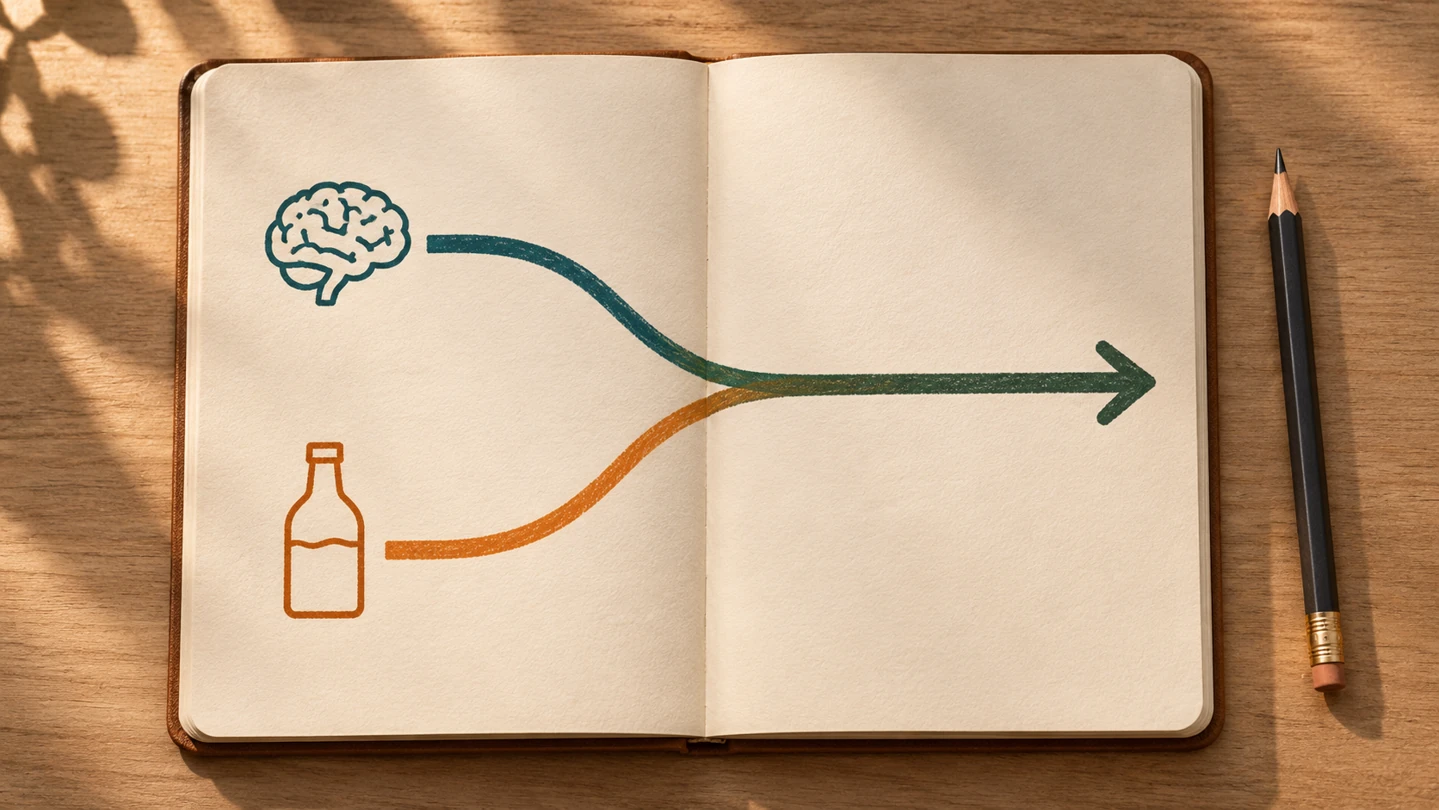
Dual diagnosis means a person has both a substance use disorder and a mental health condition. For example, someone can have alcohol use disorder and depression, or opioid use disorder and post-traumatic stress disorder (PTSD). You may also hear these called co-occurring disorders.
Sometimes both conditions are known before treatment starts. Other times, someone asks for help with drinking or drug use and the care team notices a mental health concern later. You don’t need to know which came first to ask for help.
What can dual diagnosis look like?
Someone with depression might start drinking to get through the evening. Over time, drinking may make it harder to sleep, keep up with daily life, or manage a low mood.
Someone else might first take a prescription opioid for pain after an injury. Later, they may find it hard to control their opioid use and bring it up with a clinician. If the clinician diagnoses both opioid use disorder and an anxiety disorder, that’s also an example of dual diagnosis. Taking a medication as prescribed, or becoming physically dependent on it during medical treatment, does not by itself mean someone has opioid use disorder.
These are examples, not enough on their own to tell whether someone has two disorders.
Some mental health conditions that can occur alongside a substance use disorder include:
- Depression
- Anxiety disorders, such as panic disorder
- Post-traumatic stress disorder (PTSD)
- Bipolar disorder
Feeling stressed at work or going through a hard time in a relationship can affect how you feel and cope, but that alone doesn’t mean you have a mental health disorder. If worry, low mood, or substance use keeps getting in the way of your day, it’s worth bringing up with a care provider.
How common are co-occurring disorders?
In SAMHSA’s 2025 National Survey on Drug Use and Health, an estimated 18.5 million U.S. adults ages 18 and older, or 7% of the adult population covered by the survey, had both a substance use disorder and a mental illness in the previous year. Among adults with a substance use disorder, roughly two in five also had a mental illness that year. The survey estimates whether both occurred within the same 12-month period; it doesn’t tell us whether they started or were active at the same time.
How can substance use and mental health affect each other?
Some people use alcohol or drugs to cope with worry, low mood, or memories that are hard to live with. Any relief may be short-lived. Substance use can also bring on or worsen some mental health symptoms. In other cases, shared factors, such as a history of trauma or an inherited risk, can raise the chance of both conditions.
Having both conditions doesn’t prove one caused the other. And no one has to name a specific cause to start getting support. The more useful question is what is happening now and what help could make daily life easier.
How do providers identify a dual diagnosis?
A provider may ask when you first noticed symptoms, how often you drink or use drugs, and what happens to your mood or sleep during periods when you use less or don’t use at all. It can help to mention symptoms that started before heavy use, recent changes in your use, and any previous treatment or medications.
Symptoms like trouble sleeping, anxiety, and low mood can have more than one cause. For example, anxiety that starts after someone cuts back on alcohol can look similar to an anxiety disorder. A provider looks at the person’s history and may reassess over time. That’s why it’s possible for a mental health condition to be recognized after someone has already started substance use treatment.
What does treatment for co-occurring disorders involve?
In general, providers aim to treat both conditions together rather than asking you to fix one before getting help for the other. That means planning care for substance use and mental health together, even when more than one provider is involved.
Depending on your needs, care may include talk therapy, medications when appropriate, and ongoing support. For instance, a treatment plan might help someone build ways to handle panic symptoms and identify situations that make them want to drink. The right plan and level of care depend on an individual assessment.
Where can you start?
If you’re not sure what to say, start with what you notice: “I’m drinking more than I want to, and I’ve been feeling anxious for a while.” You can tell a primary care provider, mental health professional, or substance use treatment provider. You don’t have to diagnose yourself before making that call.
If you’re looking for outpatient support in South Florida, learn how JC’s Recovery Center approaches dual diagnosis treatment and what to expect when you reach out.